Bathroom Tile Backer
In this post I'll explain everything you need to know about shower tile backer boards so you can decide which one is best for your shower remodel project and your budget.
I'll discuss each type of board and how they compare in price and performance based on my personal experience as a bathroom remodel contractor. I even put it into a handy table!
I've also provided a bit of a background to the tile backer board story and some install tips at the end to keep you on track after you've decided on your board.
This is Steve from SKG Renovations with another addition to my shower remodel series.
Ok, let's get into it!
Topics Covered:
Purpose of Shower Tile Backer Board
4 Types of Shower Wall Board
Comparing Shower Tile Backer Boards
Comparing Tile Backer Boards – A Deep Dive
Shower Backer Board Install Tips
Purpose of Shower Tile Backer Board
There is an understandable confusion about the function of tile backer board on the shower wall because all backer boards do not share the same performance characteristics.
In other words, different shower backer boards perform different functions yet they are all sold to the same group of people and they all claim to be the best solution for your shower wall.
What most people can agree on is that their main purpose is to provide a secure bonding surface for a waterproofing membrane and tile. But that's where the clarity in purpose diverges somewhat.
What is Tile Backer Board ?
Traditional Tile Backer Board is made of aggregated Portland cement with fiberglass reinforcement. It serves as structural sheeting and a secure bonding surface for waterproofing membrane, thinset mortar and tile. Some newer boards are cementitious, while others contain silica sand, wood fiber, gypsum, fiberglass, or foam. Moisture and mold resistance are now common features, but foam boards also offer a complete shower waterproofing solution.
Shower Wall Board Problems
In the early days, gypsum wall board was created to replace the very labor-intensive lath and plaster walls, and became the dominant wall board in the 1950's. It was used everywhere in the home including the shower.
Drywall was considered to be an adequate shower tile substrate because tile and grout was assumed to be mostly waterproof.
It wasn't long before it was discovered that a significant amount of moisture passes through tile and grout, especially ceramic tile and unsealed cementitious grout.
Moisture behind the tile assembly caused a few major issues.
With no waterproofing membrane, the wallboard absorbed significant moisture, causing it to swell and became more flexible. This led to a cascade reaction of movement, grout line cracking, and more moisture entering the wallboard.
And with moisture and warmth also came mold growth and still further deterioration.
In other words, these early backer boards didn't hold up well to the moisture exposure of a typical old-school shower.
Enter the Shower Tile Backer Board
In order to solve these problems, the cement tile backer board was created.
A cement based board dramatically reduced the deterioration of the backer by reducing moisture absorption and most importantly, reducing the expansion, contraction, and mold growth that occurred in the old drywall boards.
Less movement in this new cementitious board also meant less chance of grout line cracking, which meant that moisture had a tougher time seeping through and causing the cascade failure we talked about earlier.
Everything was good!…… Well maybe not so good.
The problem was (and still is) that this "solution" didn't address the first problem of vapor transmission through the tile assembly, or the second problem of absorption and transmission of moisture through the backer board.
The cement backer board still got moist just like the drywall board did, but there was much less movement and deflection so the tile assembly remained mostly intact.
A huge win!
New Shower Board Confusion
Although the problem of swelling/ deflection in the backer board was largely solved, the negative implications of vapor/ moisture transmission through the shower wall were not fully understood for a long while after cement backer board was introduced.
Eventually they realized that with todays modern "air tight" homes, moisture that entered the structure was not dissipating as it was in older homes. Excessive moisture tended to become trapped in the shower wall causing some serious problems.
Eventually some great waterproofing products and strategies were introduced to address the moisture/ vapor transmission problem. And some tile backer boards also address this problem, while others only pretend to address it.
The swelling/ deflection problem is very different from the moisture transmission problem, and they needed to be addressed in different ways.
This makes it difficult to use only one product to address both, even with the high-tech products available today.
That brings us to the actual shower tile backer board products out there today.
How do these boards differ? What materials are they made from? What problems do they claim to solve and which do they actually solve?
Find out below!
4 Types of Shower Wall Board
- Cement board
- Fiber cement board
- Glass mat tile backer board
- Foam backer board (cement coated & membrane coated)
Cement Board
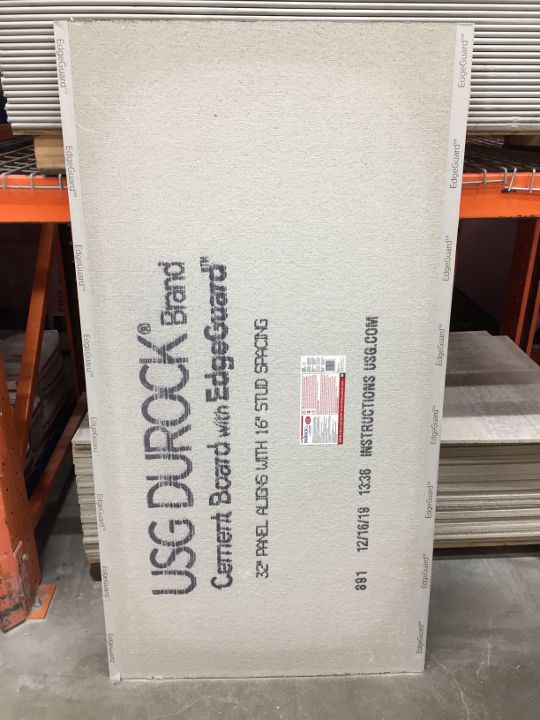
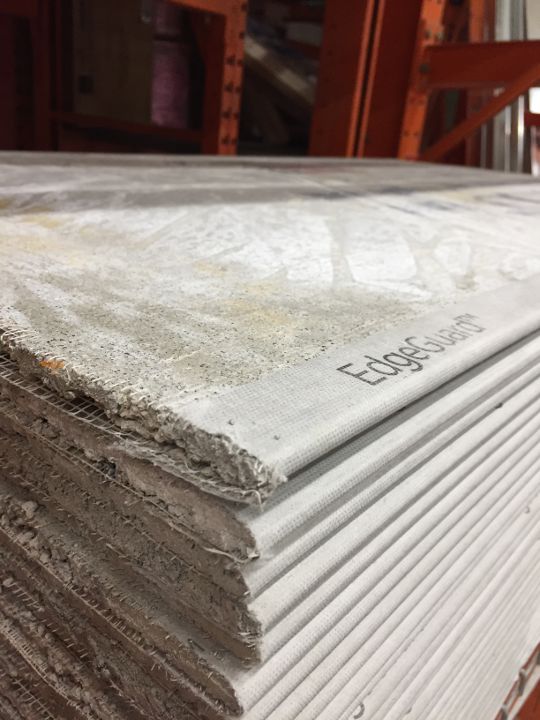
The newer versions of Cement tile backer board or Cementitious Backer Units (CBU's), are very similar to the original cement backer board. They are all made with inorganic materials – lightly aggregated Portland cement with fiberglass reinforcement.
They are designed to be impact resistant, fire resistant as well as a rigid, efficient bonding substrate for tile.
The modern versions of these boards often contain polymers with a finer fiberglass mesh on front and back, and wrapped around the long edges.
These boards are NOT moisture resistant, and in fact most absorb moisture quite readily. However, extra additives in these boards allow them to resist fungal growth and deterioration when exposed to water.
Cement boards are generally produced in only 1/2″ thicknesses because they would be too brittle and structurally unsound if they were made any thinner.
This is the least expensive shower tile backer board at around $10/board (3'x5′).
Examples of these boards include Durock Cement Board by USG, Wonderboard by Custom Building Products, PermaBase by National Gypsum and Triton Backer Board by Triton Watertight Systems.
Fiber Cement Board
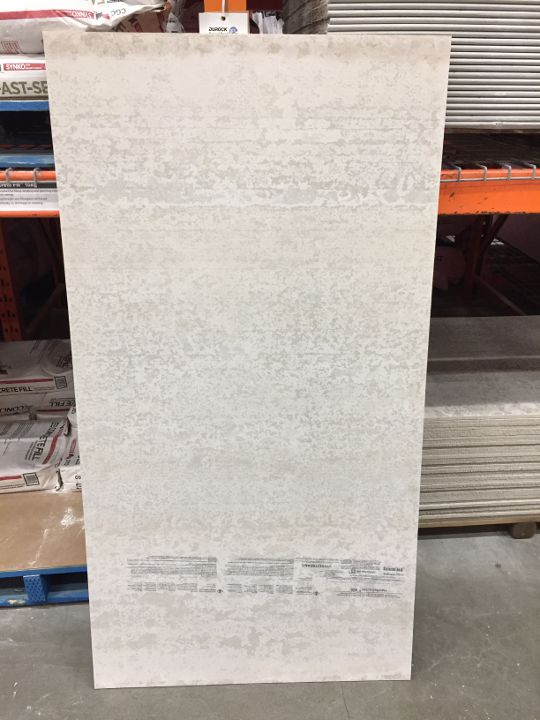
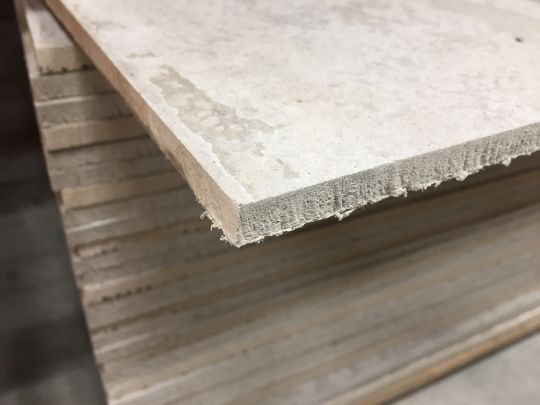
There are a few versions of these boards from different manufacturers, but they all utilize cellulose fibers (wood fibers) to make the board more flexible (less brittle).
Similar to cement backer board, these boards are generally uniform in composition (not layered). Some boards incorporate a mixture of silica sand and cellulose fibers while others use gypsum and cellulose fibers.
They also have a uniform (non-layered) and dense composition, which allows these backer boards to be manufactured in 1/4″ and 1/2″ thicknesses.
All the fiber cement boards claim to resist compression, moisture and mold.
These boards can be very similar in price to cement board, or as much as 1.5x the cost of cement backer board.
Examples of these are Hardibacker by James Hardy and Fiberock by USG and Allura Fiber Cement Backerboard.
Glass Mat Gypsum Board
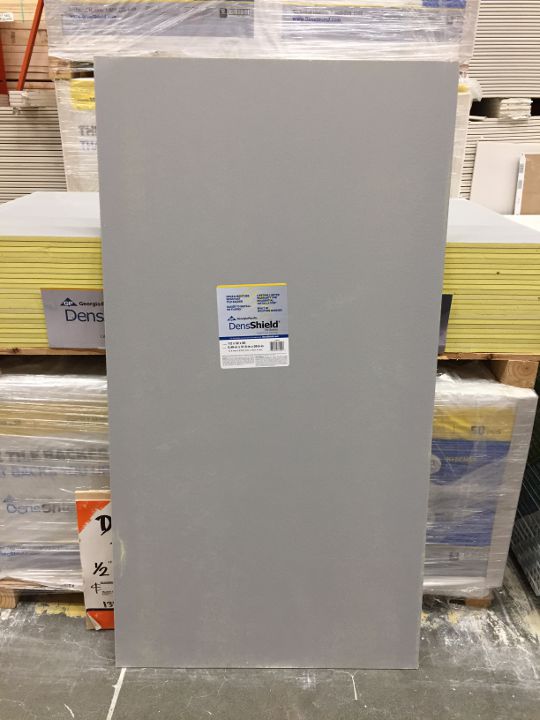
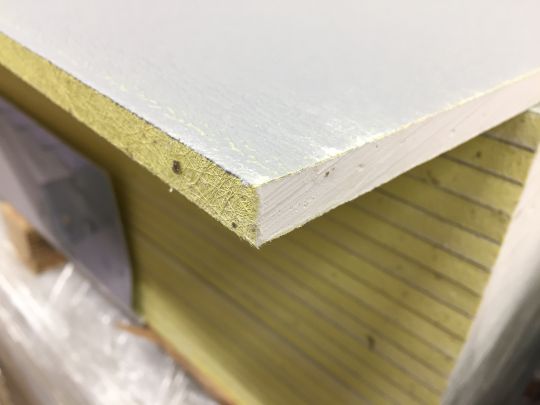
Glass Mat Gypsum board is a layered product composed of a gypsum inner core with a fiberglass layer on the front face and back face of the board.
Although these products look much like regular gypsum wall board they have an entirely water resistant, paper free (mostly fiberglass) surface, and a water resistant gypsum inner core.
Glass mat tile backer board only comes in a 1/2″ thickness, because it would not be structurally rigid enough if any thinner.
These boards can vary in price from some being similar to cement board, to as much as 1.5x the cost of cement backer board.
Examples of glass mat backer boards are Diamondback by Certainteed, Denshield by Georgia Pacific, and Durock Glass-Mat Tile Backerboard by USG
Foam Backer Board
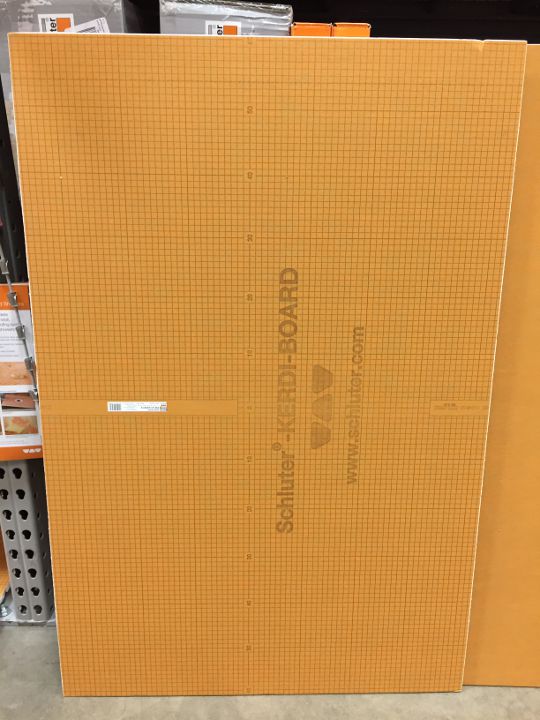
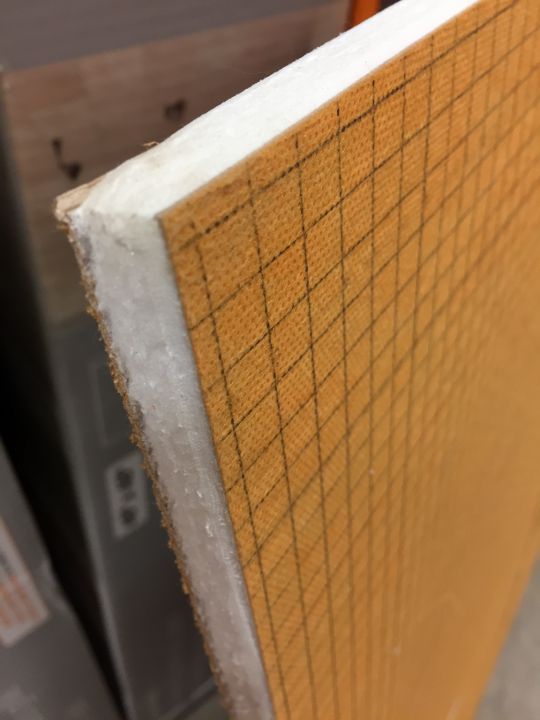
Most foam backer boards are made from extruded polystyrene foam, but a few are composed of high density polyisocyanurate closed-cell foam as well.
They are covered with a layer of reinforcement material (either fabric/ fleece or cement) on each side that's also designed for bonding to thinset mortar.
These boards are up to 80% lighter than cement boards and are highly moisture resistant. In most cases, no additional waterproofing is required after installing these boards and sealing the seams and fasteners.
Most manufacturers of these boards make them in several thicknesses so they can be used to create structural assemblies like benches and partition walls. The minimum recommended thickness for the shower wall is 1/2″ because like some of the other boards, they become far too flexible at thicknesses below 1/2″.
Foam shower tile backer boards are generally about 4x the cost of cement board.
Examples of these include Kerdi Board by Schluter Systems, GoBoard by Johns Manville, and Wedi Building Board.
Comparing Shower Tile Backer Boards
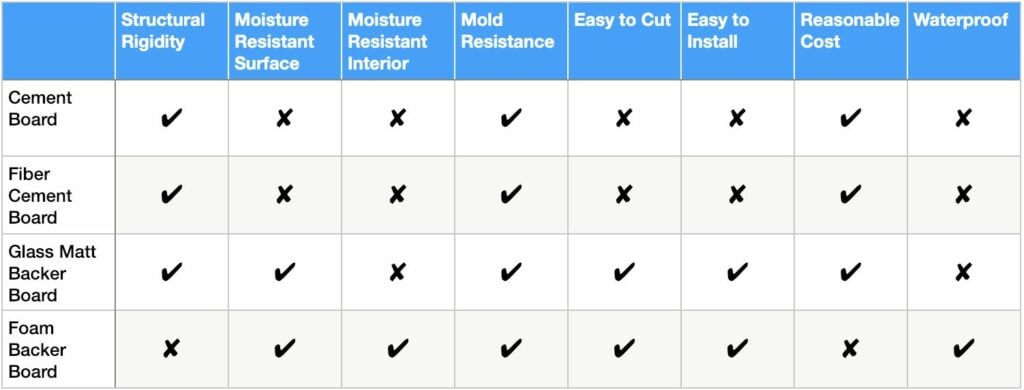
NOTE: The section for "Structural Rigidity" of Glass Matt Backer Board contains a check, mark but you should keep in mind that Glass Matt Boards can be quite rigid, but only if the wall is flat. If they fracture from being distorted over an uneven wall, they can lose their structural integrity and water resistance.
Comparing Tile Backer Boards – A Deep Dive
The table above is a "quick and dirty" comparison of these boards but some further explanation may be required for those of you concerned about the details (like me 🙂 )
Keep in mind that this comparison will include the physical and functional differences in shower backer boards but also my opinions, based on my experience installing them and testing them.
Four Main Features
The four main features in modern shower tile backer boards are:
Secure Mortar Bonding
Structural Rigidity
Mold Resistant Tile Backer
Waterproof Tile Backer Board
The confusing part is that the shower backer boards available on the market have a random assortment of these features, but none of the boards include all of these features.
It leaves the average DIY shower installer wondering which of these features is essential for your shower wall (if any), which are a load of BS (if any), and why isn't there a backer board with all these features?
I wondered these things myself…. and I still do.
Secure Mortar Bonding
The most obvious benefit of any shower tile backer board is to provide a secure bonding surface for your tile.
The original tile backer board (gypsum drywall board) absorbed moisture, which tended to cause delamination between the paper face and the gypsum core. This was the first of many problems with using drywall board as a shower tile backer.
Cement board and all other tile backers tend to have a pre-bonded, textured surface that thinset mortar can stick to very securely.
Structural Rigidity
Cementitious backer boards are still the only boards that guarantee high compression strength and unparalleled stiffness. This is important to limit movement and prevent your tile assembly from moving and cracking.
In my opinion, the glass mat shower backer boards (gypsum core) are stiff enough to support the average shower wall tile assembly, as long as the stud width does not exceed 16″ on center.
I would also like to stress that the rigidity of this type of board is quite minimal and may not withstand an impact from a large man falling against the shower wall without fracturing the grout.
Foam shower wall boards are even more vulnerable in this sense. They have generally very poor compression strength and rigidity.
If your shower wall studs are 16″ on center (max.), your tiles are larger format, you have installed a sheet waterproofing membrane, and there's no accidental impacts against the shower wall during it's service life, then your shower wall tile assembly should be ok (cement coated foam board will also help increase rigidity to a degree).
But that's a lot of "ifs".
In other words, if the finished tiled shower wall is left relatively untouched, it should all be perfectly fine. But if conditions are less than perfect, these boards can compress, and/or deflect between the studs, causing tile and grout line cracking.
Personally, I find these boards a bit too risky to install unless they are cement faced foam boards. The biggest brand of this type of backer board is Wedi. I have installed their products many times with great results.
Mold Resistant Tile Backer
In my opinion, this is kind of a BS "feature" that's included in most tile backer boards these days.
A simple fact is….. a tile and wall assembly constructed according to "best practices" would not allow any mold to grow, so "mold resistance" would be unnecessary. No significant moisture would reach the backer board, and the little that does would never condense into water.
However, if the wall and tile assembly were not constructed correctly, or if the tiling contractor didn't know what he/ she was doing, then a mold resistant board may be beneficial….. for awhile.
Excessive moisture would eventually cause any backer board to deteriorate even without the presence of mold. And if the right temperature / moisture level exists, mold will eventually grow.
I have seen several shower demolitions where the "mold resistant" tile backer board was infested with a blanket of toxic black mold after only a few years of service.
The benefit of foam shower backer boards is that moisture would not easily make it through the board so this would offer some protection against mold growth within the board and the stud cavity. But if moisture was condensing on the board's face, it would not stop mold from growing under the tile.
Waterproof Tile Backer Board
Most of the new generation tile backer boards are somewhat moisture resistant because of a dense surface coating (like Densheild), or a very dense, uniform consistency (like Hardibacker). But none of the glass matt or cementitious boards can inhibit enough moisture to be considered a true waterproofing membrane.
The foam backer boards on the other hand, can inhibit a significant amount of moisture from moving through the board; enough to be considered a true waterproofing membrane.
These boards are completely different than the other shower backer boards because of their closed cell foam core.
Because the foam backer board and foam shower pan products eliminate the need for an additional waterproofing membrane (in most cases), they have become quite popular with DIY installers and professionals alike.
Shower Backer Board Install Tips
Before you attach your tile backer board to the shower wall studs, the most important step you can take is to make sure that the wall studs are flat and plumb.
If you skip this step (most installers do), and the stud plane is not uniform (most are not), you will be creating tile lippage and tile registration problems, but you may also be compromising the water resistance and structure of your backer board.
Important, right?
Because it's so important and also quite involved, I will be preparing a separate post outlining how to prepare your shower walls for tile backer board installation, so stay tuned!
If your shower wall studs are flat and plumb, there are a few hints below to help you correctly attach your shower backer board.
Cement Board and Fiber Cement Board
If you're planning to install cement board or fiber cement board, you should pay particular attention to how they are fastened to your wall studs.
I would definitely recommend that you use only official tile backer board screws when installing any cementitious backer board, including fiber cement board.
One of the biggest problems with these products is that they can be quite brittle and can fracture easily if the wrong screws are used. Ordinary screws (even some coated screws) can also corrode if they are not designed for moisture exposure.
I always use Rock-On screws. These coated screws are corrosion resistant and can withstand the high alkalinity of a cement based shower backer board.
Another benefit of Rock-On screws is their high/ low thread configuration. These screws bite into wood like nobody's business and the H/L thread also makes them perfect for steel studs.
As I mentioned cement board is quite brittle because it's made up of primarily cement and aggregate, but it's also very hard. If you use the Phillips head screws, you'll have a tough time driving these screws in deep enough to make the screw head flush with the board surface.
And if you install the screws with a star-drive head you'll definitely get it flush, but you'll risk fracturing the board, especially at the edges and corners. The solution?
Countersinking of course.
You may be thinking how in the world do I counter sink into a cement board that's so incredibly hard? I use a tile backer board countersinking bit designed specifically for this purpose that I use routinely when installing cement backer boards and fiber cement boards.
It recesses the screw head so it doesn't get in the way when you're installing your waterproofing membrane and tile. It also prevents fracturing the board or driving the screw in too far.
Glass Matt Tile Backer Boards
Because the core of this board is gypsum, the screw installation method used for drywall board is pretty much the same, but you should always use tile backer board screws instead of drywall screws.
Also similar to drywall board installation, you need to be very careful not to drive the screws in too far because if your screw breaks through the board face, it eliminates the holding power of the screw.
It's best to use a driver bit with a stop collar when installing these screws.
This bit is designed to create a depression in the face of these boards just deep enough to flush the screw head with the board face.
Foam Shower Backer Boards
Installation of foam shower backer boards is quite a bit different again, compared with the other backer boards.
Because these boards have such a flimsy low density structure, you usually need to use only the fasteners recommended by the manufacturer to attach these boards. They usually include large washers to increase the surface area of the screw head.
Another big difference is that these boards function as both a shower backer board and a waterproofing membrane so all the fasteners must be covered with a sealer to maintain waterproofing integrity.
This is done by troweling a sealant over the screw heads (provided by the manufacturer), or applying a membrane "patch" over the screw heads with thinset mortar.
Wrap Up
Hopefully I've been successful in showing you the differences between these boards and you've been able to choose one that's right for your project. I've also tried to give you a couple of good links and suggestions for installation.
If you'd like to ask me some specific questions about this post or tips on how I could improve it, please let me know in the comment section below. I can usually answer most questions the same day they're posted. Or if you need some help on other bathroom remodel or shower remodel topics, please check out my shower remodel post.
Good luck with your project!
This post is for information purposes only and should NOT be interpreted as professional advice. You should always consult a licensed local contractor before undertaking any remodelling work in your home. Click here for my full Personal / Professional Disclosure.
Source: https://redblockindustries.com/blog/shower-remodel/shower-tile-backer-board/


Posting Komentar